


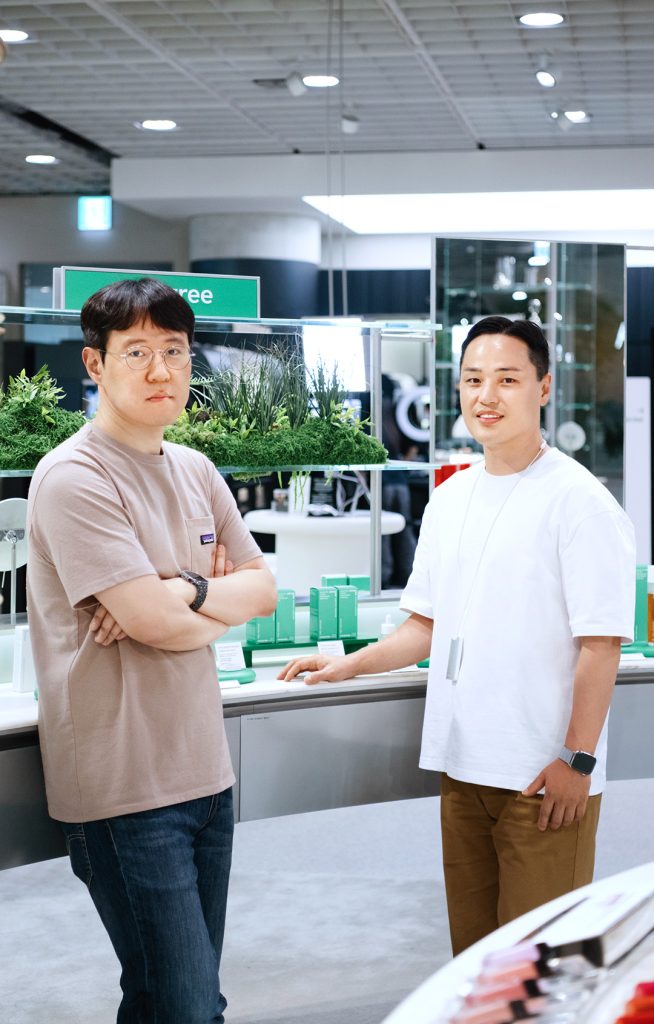
(From left) Jungho Park, Vice President of MYSC, and Yeondong Yoo, Senior Manager of Amorepacific CSR Team
An Amorepacific store. A customer reaches out to choose a product carefully arranged on the shelf. Can you imagine that this simple choice is connected to the housing challenges faced by a youth in Indonesia?
Amorepacific decided to forge that very connection. Together with MYSC, an impact investment firm, we have launched an impact fund initiative in India and Indonesia. This is a deliberate choice to solve social issues through an approach that goes beyond conventional donations or one-off campaigns. We sat down with Yeondong Yoo, Senior Manager of the Amorepacific CSR Team, and Jungho Park, Vice President of MYSC, to hear about the deep deliberation behind this decision and the real changes unfolding on the ground.
How Can Corporations Sustainably Solve Social Issues?
— What inspired the choice of this new approach—an impact fund?
Yeondong Yoo, Senior Manager of the Amorepacific CSR Team (hereafter Yoo) | Under our mission, “We Make A MORE Beautiful World,” Amorepacific has long contemplated the sustainability of our society. The climate crises and complex social issues we face today have limits to being solved through conventional methods alone. We noticed the potential of social ventures that solve social problems through innovative business models. To ensure that the flow of capital becomes a driving force that enhances social and environmental resilience beyond mere consumption, we chose the impact fund approach to generate a more systematic and long-term impact.
— What are the strategic differences compared to conventional CSR approaches?
Yoo | While conventional CSR focused on directly assisting specific beneficiaries, an impact fund is a strategic investment aimed at nurturing the actual entities that solve social problems. Furthermore, it ensures that corporate capital is not consumed as a one-off expense, but rather forms a virtuous cycle within an ecosystem that drives meaningful change.
— How did the experience of the domestic ‘A MORE Beautiful Challenge’ transition into this global initiative?
Yoo | The ‘A MORE Beautiful Challenge’ conducted in Korea served as a testing ground to verify how much of a substantial impact startups’ innovations could bring to actual society. By achieving tangible results in areas such as plastic resource circulation and ecological restoration, we became confident in the scalability of technology-based solutions. Moving forward, we plan to infuse this successful experience from Korea into our global impact fund, building a global innovation network that addresses both global environmental challenges and local social issues simultaneously.

— What is the role of MYSC in operating the impact fund?
Jungho Park, Vice President of MYSC (hereafter Park) | To make it easy to understand, you can think of us as an entertainment agency. If MYSC is the agency, promising startups are the trainees, and the fund formed by investing in them is like an idol group. Just as an agency selects trainees, helps them debut, grows with them, and eventually lets them stand on their own as independent artists when the time is right, MYSC discovers, invests in, and supports the growth of promising startups. Once they gain self-sufficiency, we help them operate as independent enterprises. This entire process is made possible through the support of Amorepacific.
We diligently search for startups that can simultaneously generate both the social value and financial growth that Amorepacific pursues, and after careful consideration, we invest in the right teams. Post-investment, we stay by their side as both a shareholder and a partner, helping them grow while making a real impact. Finally, when the fund is liquidated, we are responsible for both financial and non-financial returns.
— Is there a core principle you value most when managing the impact fund?
Park | From MYSC’s perspective as the manager of this impact fund, our starting point is a bit different. Merely finding a good company is not enough; we must also guarantee the “impact.” We first verify whether a startup can clearly define and articulate the environmental or social problem they aim to solve and why that problem matters. Only after that do we look into how they plan to solve it through their business model.
What is Possible Precisely Because It is Amorepacific
— We are curious to know why Amorepacific, a beauty company, focuses so intensely on environmental issues.
Yoo | It is because all beauty at Amorepacific begins with the vitality of nature and a healthy ecosystem. If nature collapses, not only our life’s foundations but also all the values pursued by our company cannot be sustained. This goes beyond simply reducing plastic and carbon; it is an actionable, long-term commitment to restoring soil and preserving biodiversity. Harmonious coexistence with nature is the core of the ‘New Beauty’ we define, and cultivating a sustainable environment is a mission we must rightfully shoulder as a corporation.
— Beyond capital, what can Amorepacific offer to local social ventures? What kind of synergy do you think is created when partnering with Amorepacific?
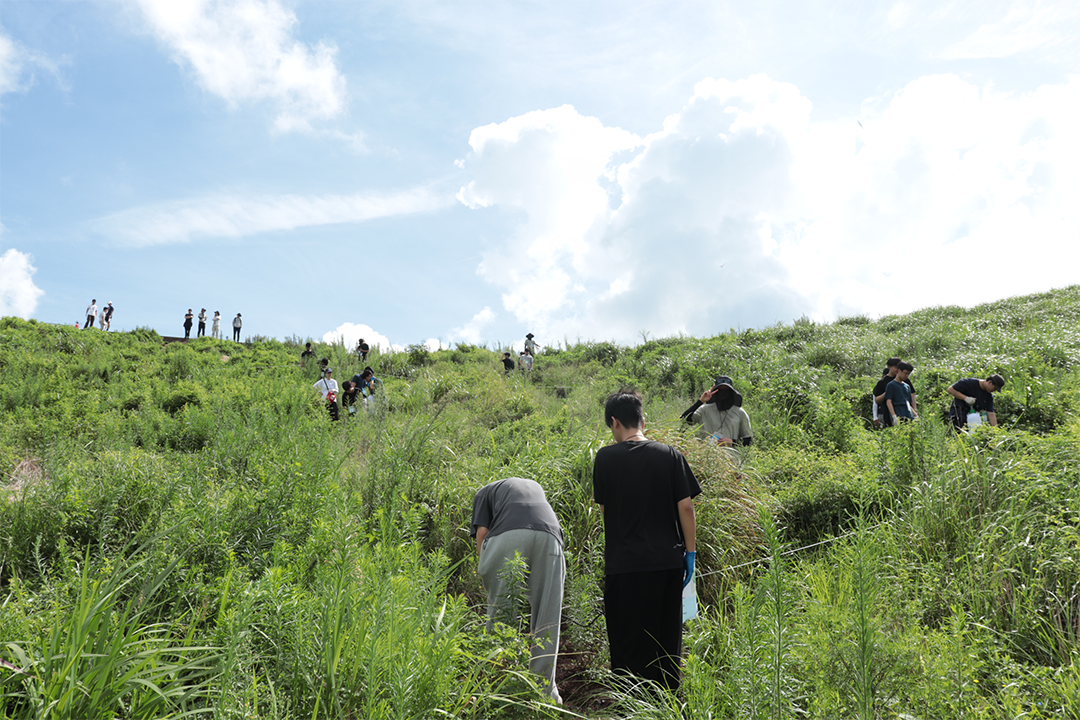
Yoo | We aim to be an open innovation partner that grows together by leveraging Amorepacific’s assets, rather than being a mere investor. For instance, we collaborated with ‘Green Continue,’ an eco-friendly materials startup, to co-develop a card wallet utilizing green tea by-products with innisfree. With ‘Code of Nature,’ we carried out a project to restore Oreums (volcanic cones) in Jeju alongside the innisfree Moeum Foundation. We continue to drive collaborations that connect startups’ technologies to our brands, product development, and ESG activities, ensuring their solutions scale into the actual market and daily lives.
Park | It is highly effective in terms of transforming a startup’s uncertainties into tangible opportunities. It creates synergy by enabling cooperation in technology development and co-planning ESG elements. Startups can use Amorepacific’s diverse resources as a stepping stone to leap forward. Furthermore, a startup’s innovative ideas can bring fresh vitality to the corporation, while the startup naturally secures an opportunity to validate its business model in the process.
True Change Comes Quietly
— Is there a specific benchmark you use to determine whether an invested company is capable of self-sustained growth?
Park | Financially, we consider a company capable of self-growth when it reaches the Break-Even Point (BEP), excluding any grant flags or subsidies. Non-financially, the criteria would be whether the company has successfully positioned itself as the go-to solution provider when people in the local community or the respective country think of a specific social issue.
— How is the performance of an impact fund measured differently from conventional investments?
Yoo | An impact fund is not evaluated solely on financial performance. We closely examine what actual social and environmental changes the invested companies have generated. We verify how their initiatives align with the *UN Sustainable Development Goals (SDGs) and measure performance utilizing international standard metric systems such as IRIS+. As will be explained in more detail later, in the case of RUKITA—which we invested in through this impact fund—we manage performance through concrete indicators that track changes in the quality of life, such as improving housing environments for youth and expanding stable residential experiences, alongside revenue or business growth.
*UN Sustainable Development Goals (SDGs): An international joint roadmap implemented to resolve universal human issues (poverty, disease, education, women, children, refugees, conflicts, etc.), global environmental problems (climate change, energy, environmental pollution, water, biodiversity, etc.), and socio-economic issues (technology, housing, labor-management relations, employment, production and consumption, social structures, law, domestic and international economy) by 2030 through 17 main goals and 169 detailed targets. Source: UNDP
**IRIS+: An Impact Measurement and Management (IMM) system developed by the Global Impact Investing Network (GIIN). It is a system designed to support investors and companies in objectively measuring, comparing, and optimizing the impact they create, and it is closely linked with the UN Sustainable Development Goals. Source: IRIS+
— Compared to simple monetary donations or campaigns, what would you say is the greatest advantage of the impact fund approach?
Yoo | I believe it is “sustainability.” Of course, donations and campaigns are also meaningful ways to create value for society. However, an impact fund introduces another layer of sustainability by creating a structure where a business can continuously solve problems while driving its own growth. RUKITA, invested through this fund, is a prime example. Watching their influence continue to expand even after the initial support phase as they achieved self-sufficiency and scaled their business gave me a firm conviction that “even when the support ends, the change carries on.”
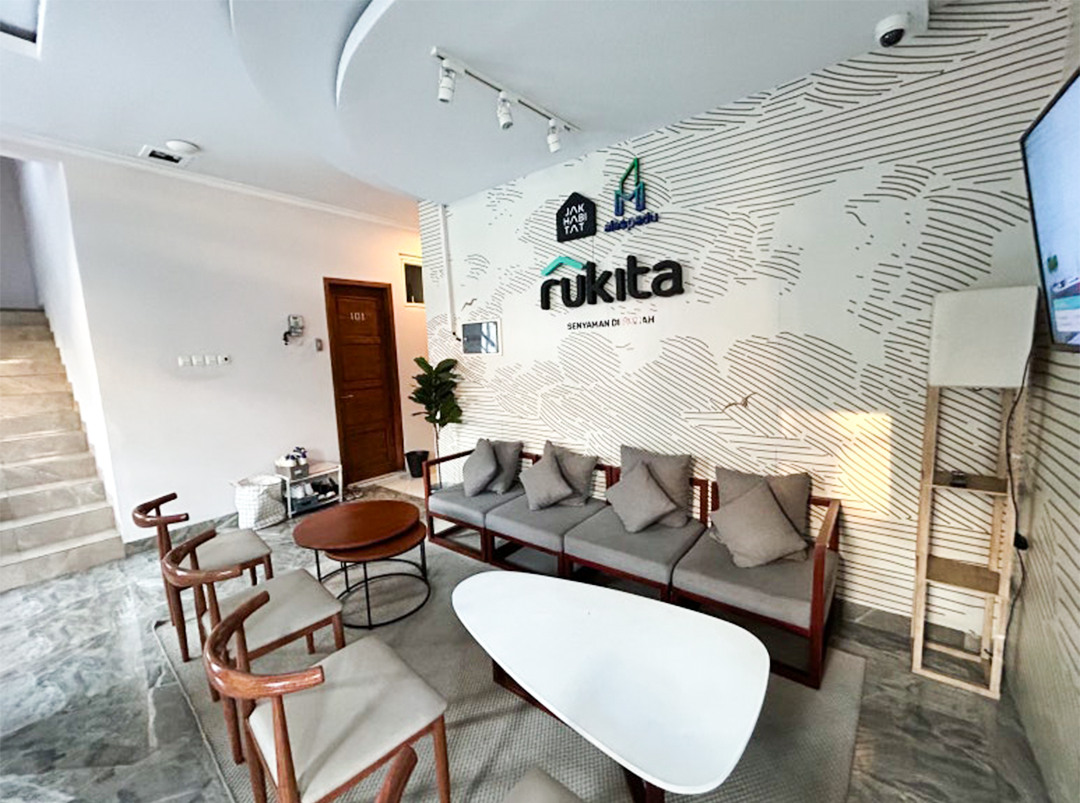
Change Beginning in the Alleys of Jakarta — RUKITA
— Could you briefly introduce RUKITA?
Park | RUKITA is an Indonesian real estate *proptech startup. Currently targeting young professionals and single-person households in major cities, it provides fully-furnished coliving houses, apartments, and premium rental houses across more than 1,200 locations nationwide. It also operates a real estate platform that showcases residential listings specifically useful for youth.
*Proptech: A compound word of property and technology, referring to services that integrate information and communication technologies (ICT) such as AI, big data, and virtual reality (VR) into the real estate industry. Source: Korea Development Institute (KDI)
— We are curious to know what the situation was like there when you first encountered RUKITA.
Park | Having traveled to Indonesia for business multiple times, if I had to pick the one experience I always wanted to avoid, it would be the rush-hour traffic congestion. Especially when heavy rain poured on the way home, I would find myself stranded on the road indefinitely, often arriving two hours late for dinner. One of the main causes of this traffic congestion is the large number of people commuting long distances. This leads us to question why so many people have to commute from afar: it is because it is incredibly difficult to find housing within the downtown core that guarantees even a minimum quality of life. For young people who moved to Jakarta looking for work, the vast majority were left with no choice but to stay in poorly conditioned ‘Kost’ (local boarding houses) while enduring high rents, even when trying to find a place near their workplace.
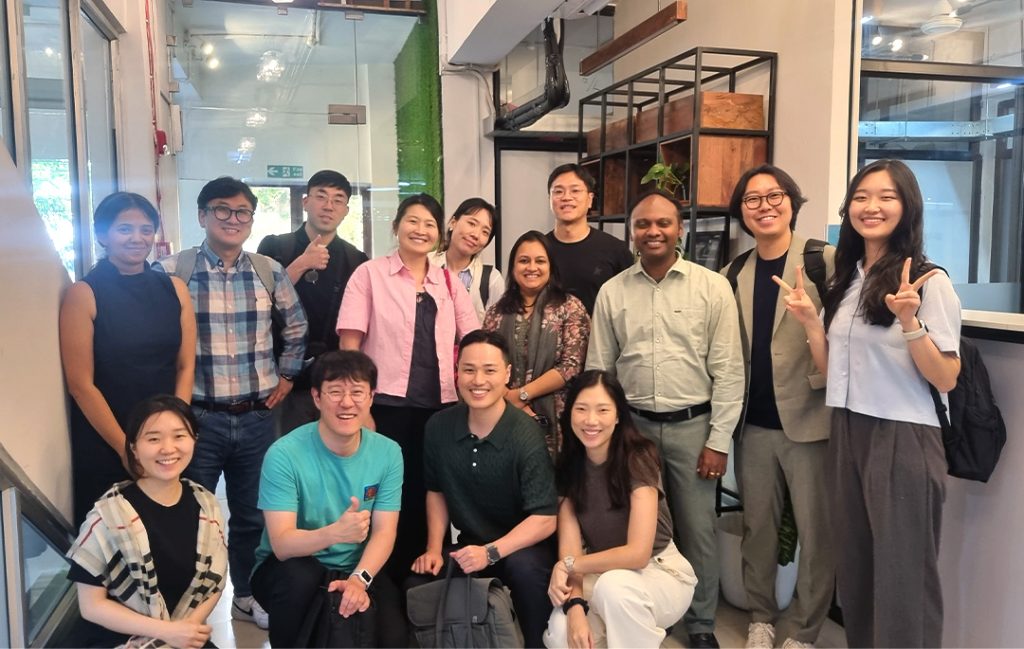
— What were your impressions when you personally toured the Kost in Jakarta?
Park | The power lines were not buried underground, making them hazardous, and the sewage system was exposed right next to the road. It was a situation where I could hardly imagine how severe the heat and stench must be. Seeing this firsthand made me realize that the affordable, quality housing provided by RUKITA is absolutely essential for young professionals taking their first steps into society. For these youths who are forced into a Kost that is both overpriced and poorly conditioned, I truly felt that RUKITA was a beacon of hope—and that belief remains unchanged to this day.
— Do you believe that the changes driven by RUKITA extend beyond housing into broader areas?
Park | Yes. Once young people secure a stable home, they can cut down on their commute times and find the leeway to seek better employment opportunities. I believe that addressing the housing problem ultimately creates a flow that leads to urban sustainability and job creation.

Those Who Seek the Most Challenging Intersection
— Throughout this initiative, were there any moments of decision-making that proved more difficult than expected?
Park | I don’t think it has ever been easy. (Laughs) Simply identifying and supporting companies that can grow successfully to go public or be acquired is a major challenge in itself. Finding startups that occupy that precise intersection—where they also guarantee a verifiable social impact—always feels like an incredibly high-stakes task.
Yoo | Rather than pointing to a single moment, I find it consistently challenging whenever I have to balance short-term performance against long-term impact. In impact investing, however, how structurally a company can solve a problem and how sustainable its model is matters far more than quick returns. Ultimately, what we value and pursue is not today’s immediate metrics, but the scale and direction of the change we will create moving forward.
— Could you share the ultimate change you hope to achieve through this impact fund?
Yoo | Amorepacific’s impact investing is a journey to beautifully transform people and the world, going far beyond simply generating financial returns. We dream that the technologies of the social ventures we support will heal the soil to slow down the climate crisis, and establish themselves as innovative solutions that address the blind spots of our society. Ensuring our customers feel a sense of pride—knowing that simply choosing Amorepacific means joining a movement to make a better world—is the true transformation we wish to drive.
Park | It is about intending positive social change rather than just transforming a single company, and using that as a foundation to actually shift the perceptions of diverse stakeholders. I believe this initiative is deeply meaningful because it marks that very beginning. Taking this as a catalyst, I hope to see these types of ventures discussed and implemented much more widely.
The Cosmetics I Use Are Creating New Changes on the Other Side of the World
A cycle where a company built on beauty protects nature, and that nature becomes the foundation of beauty once again. A structure where a consumer’s choice leads to the growth of a social venture, and that venture’s growth leads to a home for a youth in Jakarta. The approach Amorepacific has chosen demonstrates that CSR is not a matter of mere activity, but of core philosophy.
Through investment rather than donations, and by nurturing an ecosystem rather than offering one-off support. This transformation, which began in India and Indonesia, is set to expand globally. At the very beginning of that powerful flow lies a single product I chose today.
Discover more on AMOREPACIFIC STORIES.